
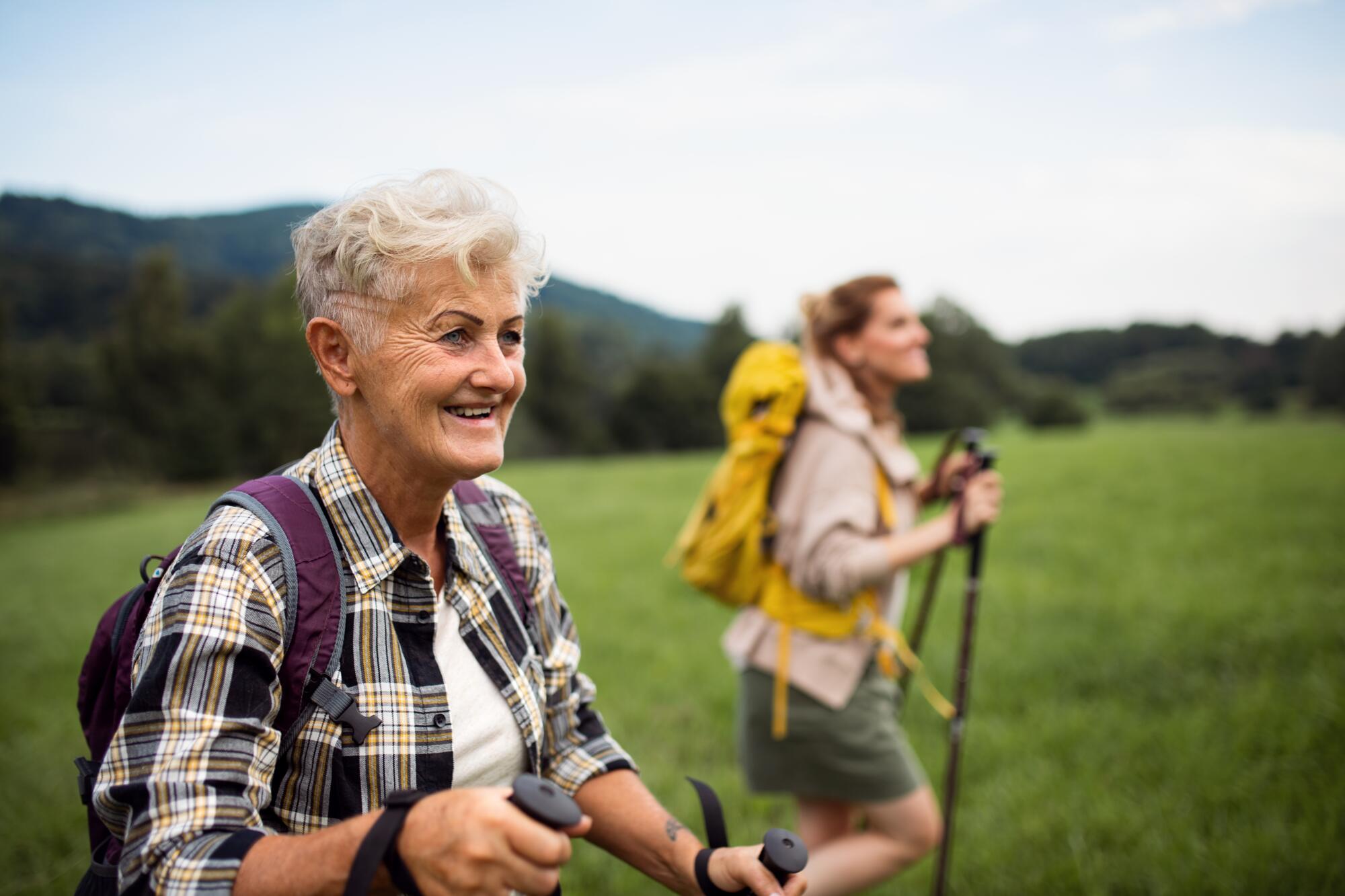
How to use hiking poles? Hiking poles improve balance outdoors by widening your base of support, reducing joint strain, and adding two steady points of contact on uneven ground. When sized correctly and used with a natural arm swing, they help stabilize your body on climbs, descents, loose gravel, mud, and wet rock.
Balance is not something most people think about until it falters. The prevalence of balance disorders in the elderly Myrtle Beach, SC, population is relatively high and increases with age. About 30% of adults aged 65 and over will experience balance problems or dizziness at some point in their lives, according to studies in Aging and Disease. On a trail, that statistic stops being abstract.
Hiking poles offer a simple, practical solution. Each plant of the pole supports your stride, distributes weight more evenly, and provides instant feedback about the terrain ahead. What feels like a small adjustment in gear can dramatically shift how secure you feel outdoors, especially when stability matters most.
Are Walking Poles Good for Balance?
Walking poles are highly effective for improving balance, especially on uneven or unpredictable surfaces. They create two additional points of contact with the ground, which widens your base of support and reduces the likelihood of sudden missteps. That added stability can make a noticeable difference when navigating gravel paths, grassy parks, sandy beaches, or sloped sidewalks.
Poles also encourage better posture. Standing upright with relaxed shoulders and a steady forward gaze helps keep your center of gravity aligned. This reduces forward-leaning and shuffling steps, both of which can increase fall risk.
Another benefit is the ability to test terrain before committing your full weight. A light plant of the pole can reveal loose gravel, slick patches, or soft ground. This small action gives your body extra time to react and adjust.
Over time, consistent use of hiking support gear retirement can improve coordination between the upper and lower body for seniors living in independent living communities.
Hiking Pole Tips for Seniors
Small adjustments can make hiking poles far more effective for balance and comfort. Start with the right height. When standing upright on flat ground, your elbows should bend at about 90 degrees. That angle supports a natural stride and prevents shoulder strain. Recheck the height if you switch shoes or move onto steeper terrain.
Grip matters more than most people realize. Use the wrist straps correctly by sliding your hand up through the strap from underneath, then resting your palm lightly on the handle. This allows the strap to carry some of the load, reducing hand fatigue and helping maintain control without squeezing tightly.
Take shorter, steadier steps as part of walking pole technique older adults instead of long strides. Poles work best when placed slightly ahead and to the side of your foot in a smooth alternating rhythm. Rushing or planting the poles too far forward can throw off balance rather than improve it.
Pay attention to the surface underfoot. On pavement, rubber tips provide traction and reduce vibration. On dirt or gravel, carbide tips grip better. If walking on sand or light snow, attach baskets to prevent sinking. Matching the tip to the terrain increases stability immediately.
Begin with flat, familiar routes before exploring uneven trails. Consistent practice helps poles feel like a natural extension of your movement, supporting safer and more comfortable outdoor activity.
Should Seniors Practice With Hiking Poles Before Hitting a Trail?
Practice makes a noticeable difference while using trail walking aids seniors. Even though outdoor balance tools seniors seem straightforward, coordination takes a little time to feel natural. Seniors benefit from building rhythm, confidence, and comfort on flat, predictable surfaces before heading onto uneven trails.
Start in a familiar setting such as a quiet sidewalk or smooth park path. Focus on alternating arm and leg movement, keeping posture upright, and maintaining a relaxed grip. Short sessions of ten to fifteen minutes allow the body to adapt without fatigue.
Practicing also helps seniors adjust pole height properly and learn how much pressure to apply through the straps. Small technique corrections early on prevent awkward habits that could reduce stability later.
Once the movement feels smooth and automatic, transitioning to light trails becomes much easier.
FAQs
How Tall Should Hiking Poles Be for Seniors?
Hiking poles for seniors should be adjusted so the elbows bend at about a 90-degree angle when standing upright on flat ground. This position supports natural arm movement and steady balance without straining shoulders or wrists.
As a general guide, poles are often set at roughly 0.68 times your height. For example, someone who is 5 feet 4 inches tall typically uses poles around 105-110 cm. Adjustable poles make it easy to fine-tune the height for comfort.
Are Collapsible Hiking Poles Better for Seniors?
Often, yes. Collapsible hiking poles are easier to store, carry, and adjust, which makes them practical for seniors who walk in different environments.
They fold down small enough to fit in a car, closet, or tote bag, so they are more likely to be used regularly, even for seniors in independent living. Adjustable lengths also allow quick changes for hills or uneven ground.
While one-piece poles can feel slightly sturdier, most modern collapsible designs offer plenty of stability for sidewalks, parks, and light trails.
Are Hiking Poles Useful During Cold or Wet Weather?
Yes. Hiking poles are even more valuable in rain, snow, or icy conditions because they give you two extra points of stability when surfaces get slick.
Wet sidewalks and frosty paths reduce traction fast. Poles let seniors test the ground before committing full weight, which lowers the risk of slips. Snow baskets prevent sinking.
Cold weather can also stiffen joints and slow reaction time. Hiking poles help compensate, offering steady support with every step so outdoor walks stay safer and more controlled.
How to Use Hiking Poles? Now You Know
How to use hiking poles? It’s not as hard as you think – at least, not with this guide.
Ready to put those hiking poles to work somewhere beautiful? At TerraBella Myrtle Beach, you can practice steady, confident strides along our scenic walking paths, through the private courtyard, or on outings just minutes from the Golden Mile and the Atlantic shoreline.
See how balanced, coastal living feels in real life. Contact us today.